

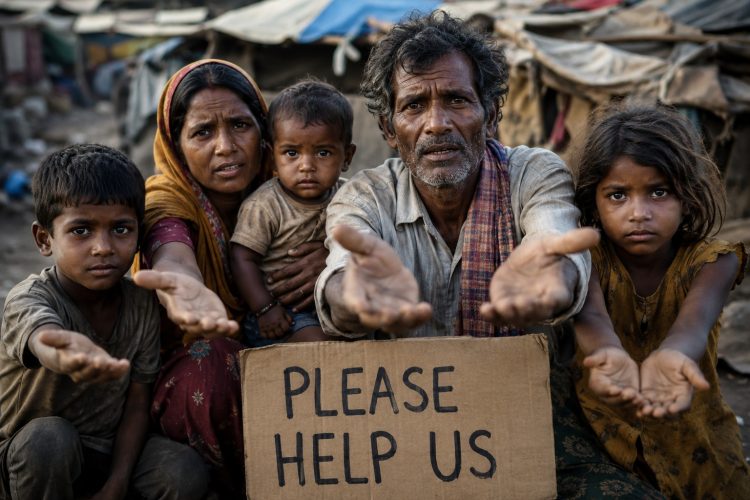
The recent Supreme Court judgment that Christians cannot be classified as Scheduled Castes has stirred many emotions. I read the verdict with sadness, but not because I believe the Court was wrong. In fact, the Court merely interpreted the Constitution as it stands. Scheduled Caste status was originally created to address the historical discrimination and untouchability suffered by specific communities within the Hindu fold, and later extended under certain constitutional provisions to Sikhs and Buddhists. The judges could not simply rewrite what the Constitution says.
But while the Court may have been right, I believe our governments have been unfair.
Somewhere along the way, governments rightly recognised that millions of people from every religion live in terrible poverty. They introduced scholarships, welfare schemes and various forms of assistance for economically weaker sections.
Yet when it came to reservations in jobs and education, the conversation remained trapped inside religious and caste boundaries instead of confronting the real enemy, which is poverty.
Tell me, does hunger ask for your religion before entering your home?
Does an empty stomach know whether the child is Hindu, Christian, Muslim, Sikh or Jain?
Does a mother struggling to feed her children become less deserving because she prays differently?
Poverty has no religion. Misery has no caste. Hopelessness certainly does not carry a caste certificate in its pocket.
Instead of forcing genuinely poor citizens into categories that were never meant for them, governments should have created a strong, transparent economic classification that ensured every family living below a certain standard received meaningful help.
Good schools, scholarships, healthcare, skill training, employment opportunities and housing should reach every poor citizen, regardless of the place where they worship.
That would not weaken existing constitutional protections meant to address historical injustice.
Those should remain. But alongside them, there should be an equally powerful commitment to ensuring that poverty itself is fought with the same determination.
Sadly, governments often find it easier to play politics with identities than to wage war against deprivation.
Vote banks become more important than empty dinner plates.
The result is predictable. Communities begin competing against one another for benefits instead of standing together against poverty itself.
Suspicion grows. Resentment grows. Division grows.
Surely India deserves better.
The Supreme Court has interpreted the law. Now it is Parliament and the governments, both at the Centre and in the states, that must show wisdom. Create a system where no poor child is left behind simply because he or she belongs to another religion or another category.
Justice is not only about protecting history. It is also about protecting the future.
And the future of India will be stronger only when poverty, not religion, becomes the enemy we are determined to defeat…!
———————————–
Become an author… Click here
————————————-
Would love to hear from you in the COMMENTS section below…and IF YOU WANT TO RECEIVE BOB’S BANTER EVERYDAY, PLEASE SEND YOUR NAME AND WHATSAPP PHONE NO TO [email protected]
————————————————–





 Robert Clements is a newspaper columnist and writes a daily column, which has graced the pages of over 60 newspapers and magazines, from a daily column in the Khaleej Times, Dubai, the Morning Star, London, and in nearly every state in India, from The Statesman in Kolkata, to the Kashmir Times in Kashmir to the Trinity Mirror in Chennai.