

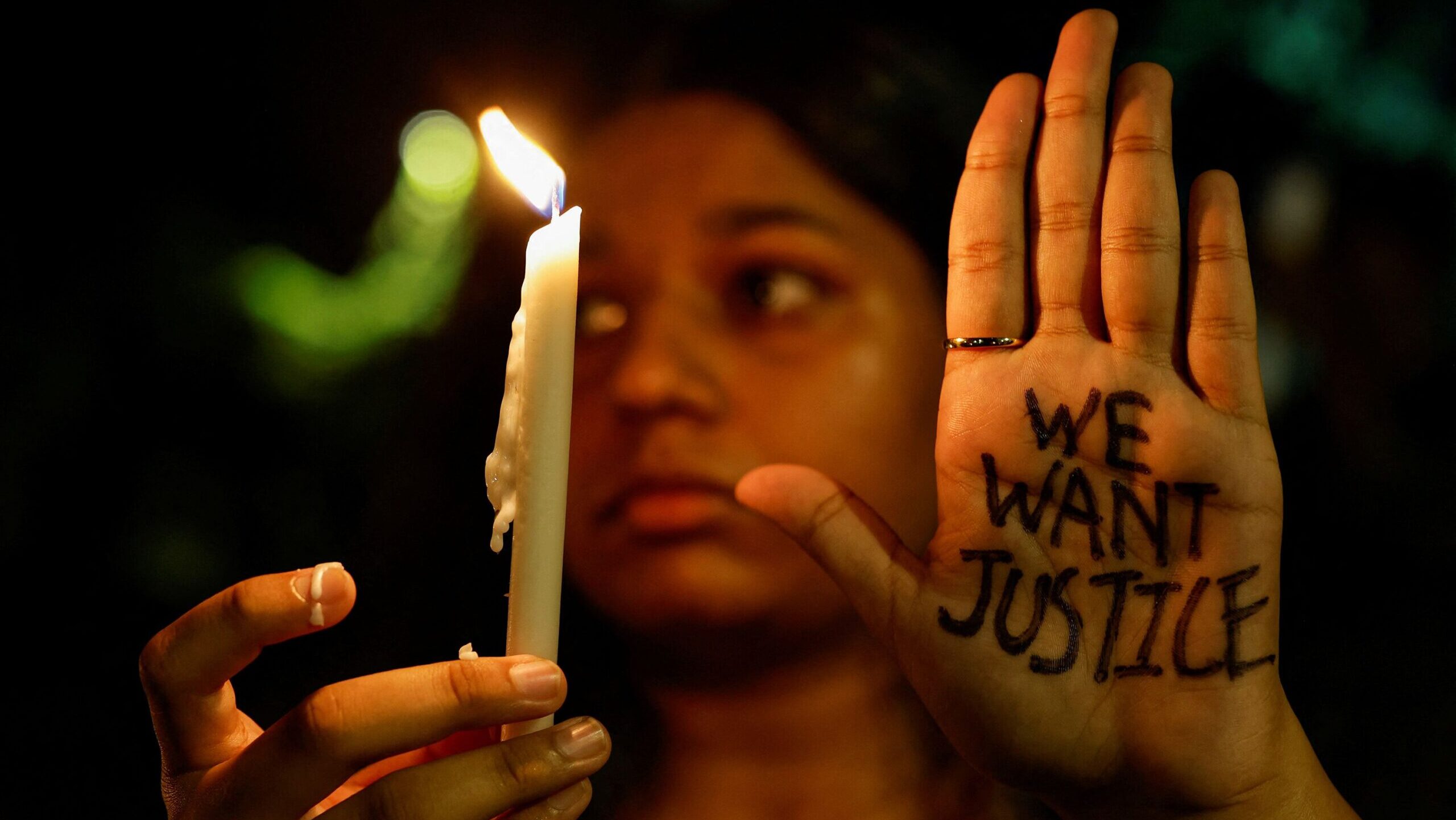
They were just two young women, Australian cricketers, guests of our nation, here to play the game we love more than we sometimes love our women. And yet, as they walked to a café, a man on a motorbike came close enough to touch, grope, and ride away laughing.
Within hours, the police arrested him. But for the two players, and for millions of women watching, the damage was done. Fear, once felt, does not fade with an arrest. It lingers in the mind, sits beside every woman waiting for a bus, follows her shadow home.
We live in cities that boast of progress, where every corner has a CCTV camera and every government promises safety. But between the eye of the camera and the eye of the street lies a truth we refuse to see, that safety is not just about surveillance, it is about culture.
You can install a thousand cameras, but unless respect is wired into men’s minds, the footage will keep repeating the same old scenes.
And that culture begins right at the top. A leader walks out on his wife, a film star has two wives and we still give him and the home breaker, seats in Parliament to represent us. Who questions? Ever wondered or asked the wives how they felt after their husbands left them? Were you ever interested in knowing?
Ever thought of the quiet humiliation she faces when the same society celebrates the man who abandoned her?
When disrespect becomes entertainment and infidelity earns applause, why should we be shocked when decency disappears from the streets?
If our public figures can treat marital relationships like old clothes to be discarded, why would the man on the street treat a stranger with respect?
We build temples to goddesses and call our country their abode, yet cannot guarantee that the women walking our streets are safe. We teach our girls to cover up, to walk quickly, to avoid crowds.
But with such examples, we cannot teach our boys that dignity is not something you snatch, it is something you show.
And so, our public spaces remain theatres of private fear. A woman walks, shoulders tense, keys clenched in her hand, pretending courage while calculating escape routes. Somewhere, a man speeds past, his act of assault disguised as a thrill. Between them lies a nation that has learned to look away.
But maybe, just maybe, it is time to stop looking away. Safety cannot be outsourced to the police alone. It begins at home — in how we treat our wives, in what our sons see.
Indore’s shame will not end with one arrest. It will end when we lead by example. Till that day, our clean cities will remain unclean in spirit, our progress half built, our pride undeserved.
And every time the world looks at us through the eyes of a frightened woman, we will know, it was not the city that failed her, it is us…!
————————————————–
Would love to hear from you in the COMMENTS section below…and IF YOU WANT TO RECEIVE BOB’S BANTER EVERYDAY, PLEASE SEND YOUR NAME AND WHATSAPP PHONE NO TO [email protected]
————————————————–







 Robert Clements is a newspaper columnist and writes a daily column, which has graced the pages of over 60 newspapers and magazines, from a daily column in the Khaleej Times, Dubai, the Morning Star, London, and in nearly every state in India, from The Statesman in Kolkata, to the Kashmir Times in Kashmir to the Trinity Mirror in Chennai.
Good morning Bob !
Well written ! Hope our mind set will change , our inner self be clean so we can feel better secure in a World of fear .
Yes, it’s not the city that failed, we all our responsible. I think all the young mother’s having Sons, should start teaching them to respect woman & teach them the moral values of life, before sending them to kindergarten to learn the 26 Alphabets.
True Molly.
Yes Sheela, thank you.
Overwhelming reality in a society which is still misogynistic and patriarchal despite advancement and progress in the field of science, economics, medicine and even psychiatry.
We haven’t progressed if women feel violated, unsafe and taken for granted by men in society.
Rightly said Shylaja. Thank you
Thank you Bob for examining different perspectives to this social concern, starting with those at the top. I wonder, in cases of assault, apart from prosecuting the offender, does anyone try and identify/understand the mindset that led to the act? Won’t that be crucial to address the problem from its root and thus to prevent recurrence?
That’s what they try to do abroad. Here they don’t, maybe it would open a can of worms Sonia.
Thanks for bringing it up Uncle. True we as a society have a long way to go.
Thanks William, certainly a long way.