

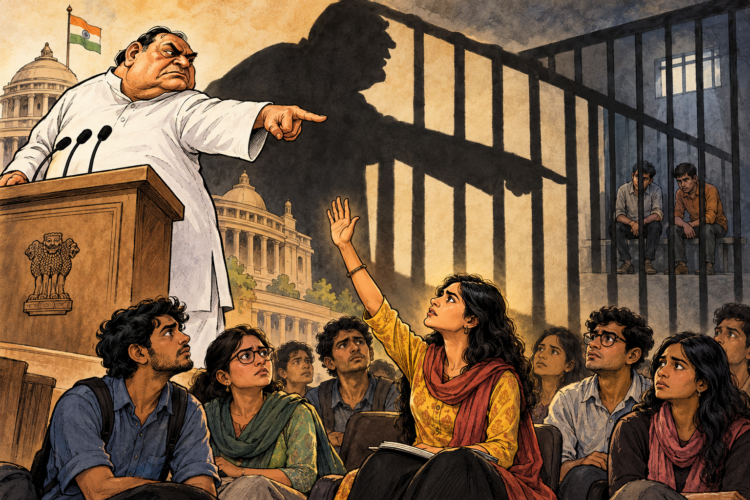
“Any questions?” asks the man at the microphone. A youngster raises his hand. The man looks offended. Apparently, the question was part of the decoration, like the flowers beside the podium. Nobody was expected to take it home and water it.
I thought of this while reading about the postponed bail hearing of Saurav Das and Ashutosh Ranka, after the special executive magistrate recused himself, citing threats to his life. Their lawyers have questioned the delays; police say procedures must be followed.
Threats deserve investigation. Anyone facing them deserves protection. But surely a system powerful enough to put youngsters behind bars should be capable of arranging another officer to hear their case promptly. Must liberty sit outside the office until somebody finds the appropriate chair?
What worries me is the lesson other youngsters might draw. Ask an uncomfortable question, attend a protest, challenge authority, and your parents could spend their evenings finding lawyers instead of asking whether you have eaten dinner.
Quite an impressive career counselling programme, really. “What would you like to become, young man?” “Quiet, sir. Preferably invisible.”
Years ago, my daughter asked a priest a question. Instead of answering her, he demanded, “How dare you?”
I have often wondered what happened inside his head. Had the question misplaced its footwear before entering? Was curiosity permitted only after obtaining a baptism certificate, three signatures and permission from the church committee?
He had an opportunity to deepen a young person’s understanding. Instead, he tried to frighten the question out of her. That is what insecure authority does. It mistakes a raised hand for a clenched fist.
And when governments acquire the same habit, the consequences travel beyond one disappointed daughter. Young citizens begin to wonder whether democracy is a conversation or a school assembly where the principal speaks and everyone else develops excellent posture.
What are we showing the world? We invite investors to admire our confidence, then appear alarmed when our own children display some. Surely national strength should include the ability to hear, “Sir, I disagree,” without sending for a police vehicle.
I worry that prolonged uncertainty itself becomes a warning. Even without a conviction, the missed classes, frightened families and mounting expenses can tell thousands watching, “Keep your questions to yourself.”
Indira Gandhi’s Emergency should have taught us something. Censorship and imprisonment could suppress voices, but they could not guarantee loyalty. In 1977, voters removed her government. The ballot box proved considerably less obedient than the frightened microphone.
Our youngsters will sometimes be impatient, inconvenient and wrong. So were we, though our generation has thoughtfully misplaced the evidence. Answer them. Debate them. Where an offence is alleged, establish it fairly and promptly. Do not let waiting become a substitute for justice.
A frightened youngster may lower his voice today. But beneath that silence, resentment can grow. If those in authority want the respect of the young, they must give them reason to trust the system. “How dare you?” never answered my daughter’s question. It will not answer theirs either…!
———————————-
Become an author… Click here
————————————-
Would love to hear from you in the COMMENTS section below…and IF YOU WANT TO RECEIVE BOB’S BANTER EVERYDAY, PLEASE SEND YOUR NAME AND WHATSAPP PHONE NO TO [email protected]
————————————————–




 Robert Clements is a newspaper columnist and writes a daily column, which has graced the pages of over 60 newspapers and magazines, from a daily column in the Khaleej Times, Dubai, the Morning Star, London, and in nearly every state in India, from The Statesman in Kolkata, to the Kashmir Times in Kashmir to the Trinity Mirror in Chennai.
