

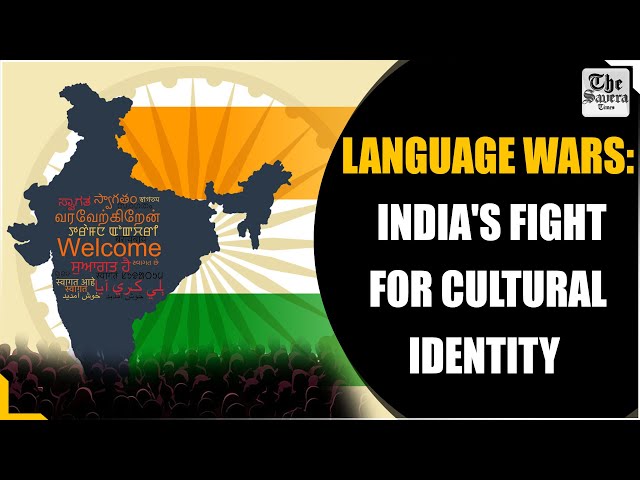
Hey guys! Yes, you—with the raised fists and the angry slogans, thrashing that helpless commuter just because he couldn’t say, “Where’s the bus stop?” in your language. Here’s some breaking news: in just a matter of months, maybe even weeks, every man, woman, and chaiwala will carry a gadget that will translate whatever needs to be said—word for word, tone for tone, even complete with the right expression and local accent.
So what are you going to do then? Smash the gadget? Break the phone? Or maybe slap the artificial intelligence into learning your idioms?
Let me tell you this—your problem isn’t really with the language, is it?
You’re not panicking because someone can’t pronounce “vangi bath” correctly. You’re anxious because you feel your identity is slipping away. Your culture, your traditions, your stories—slowly being steamrolled under highways, high-rises, and outsiders who don’t bother to understand what makes your place home.
And that fear, I understand.
Now I’m not talking about the politicians—let’s leave them out of this. Their only fluency is in one language: divide and conquer. If there’s peace, they’ll break it. If there’s harmony, they’ll sing out of tune. First, it was caste. Then religion. Now it’s your mother tongue. And tomorrow? They’ll probably have us arguing over who boils water the right way.
But the common man, the local on the street—his worry is not just words. It’s memories. It’s identity. It’s the grandmother’s lullaby that nobody sings anymore. The folk dance that gets one performance a year, on a dusty stage at the annual school day. It’s that sacred something that makes a place feel like ours.
And I get that. Truly.
I remember, as a young man, moving into a new state—everything was alien: the food, the festivals, the way they folded their newspapers! But I didn’t sit in my corner sulking. I roamed the streets, spent afternoons in dusty libraries, peered into museum glass cases, and chatted with shopkeepers about their town’s past. Slowly, that city stopped being “new.” It became home. Today, I claim it as mine—as much as the two other cities I grew up in.
Because I didn’t just learn to speak the language—I learned to live it.
So yes, ask newcomers to learn. But don’t bash it into them. Don’t reduce your heritage to a sentence shouted in anger.
Instead, bathe them in it.
Host cultural festivals. Welcome them into your homes. Serve them your traditional food—not as a test, but as a celebration. Let them watch your rituals, hear your stories, laugh at your jokes (even if they don’t understand the punchline just yet). A few years back in New York, a Jewish family asked me to celebrate their Sabbath with them. They even asked me to read out portions from their religious book. Today, their religion and culture is not strange anymore.
In the same way what a change there will be when someone begins to feel your culture, not just mimic it.
And that’s something no gadget—no matter how smart—will ever truly translate…!
————————————————–
Would love to hear from you in the COMMENTS section below…and IF YOU WANT TO RECEIVE BOB’S BANTER EVERYDAY, PLEASE SEND YOUR NAME AND WHATSAPP PHONE NO TO [email protected]
————————————————–







 Robert Clements is a newspaper columnist and writes a daily column, which has graced the pages of over 60 newspapers and magazines, from a daily column in the Khaleej Times, Dubai, the Morning Star, London, and in nearly every state in India, from The Statesman in Kolkata, to the Kashmir Times in Kashmir to the Trinity Mirror in Chennai.
It’s the latter part of this article that is poignant, to “live” a culture rather than merely “speaking” it.
The best way to promote a language or culture is to invite the outsiders to their homes and celebrate their food, tradition and as you mentioned even read from their religious books.
Yes Carmelita, thank you.
Lovely.
This is what our country should be. A blend of languages, cultures and religions living under one roof called home.