

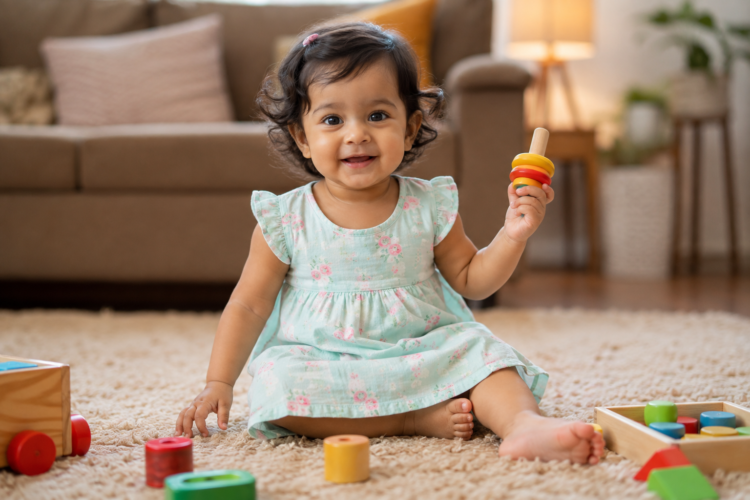
As I watch my youngest grandchild slowly using her left hand more than her right, I wonder whether she is going to be left-handed.
I watch her pick up a toy with her left hand, transfer a biscuit into it, and occasionally wave it about like a politician who has just discovered another crowd.
“Perhaps she is left handed,” I say.
Nobody panics. Nobody calls a priest. Nobody summons a teacher carrying a ruler. Nobody forms a parliamentary committee to investigate whether her left hand is anti national.
Yet, not very long ago, that innocent little hand would have caused considerable alarm.
Well into the twentieth century, teachers in Britain, North America, and elsewhere forced left handed children to write with their right hands. Some even tied the offending hand behind the child’s back. This was called education.
The child may have called it torture, but children were not consulted. Adults knew what was best, especially when they were completely wrong.
The prejudice had ancient roots. The right hand was associated with goodness, strength, and divine favour. The left hand suggested weakness, wickedness, and bad luck. Even the word “sinister” comes from the Latin word for left.
Imagine that. A hand reaches for a glass of water, and civilisation cries, “Sinister forces are at work!”
Then came Italian criminologist Cesare Lombroso, who decided prejudice needed scientific respectability. He claimed left handedness was common among women, children, criminals, and people he described through the racist and colonial vocabulary of his age.
His conclusions were later discredited, but nonsense does not always need evidence. It only needs an important looking man, a few statistics, and an audience trained not to ask questions.
Fortunately, educators and psychologists gradually realised that forcing children to change their natural hand could do more harm than good. Today, left handedness is accepted as part of normal human variation.
A left handed child is no longer considered defective, dangerous, or secretly planning the collapse of civilisation.
Strange, is it not, that we have learned to accept different hands but still struggle to accept different minds, faiths, languages, cultures, and political opinions?
We readily cheer a left handed batsman who wins a cricket match for India. Nobody demands that he change hands before hitting the winning six. Nobody says his stroke is unacceptable because the majority bats right handed.
Perhaps our ruling party should watch more cricket.
It might discover that a nation does not become strong by forcing every citizen to think, worship, speak, vote, and salute in exactly the same way.
It takes both hands to clap.
And it takes all sorts to make India..!
———————————–
Become an author… Click here
————————————-
Would love to hear from you in the COMMENTS section below…and IF YOU WANT TO RECEIVE BOB’S BANTER EVERYDAY, PLEASE SEND YOUR NAME AND WHATSAPP PHONE NO TO [email protected]
————————————————–


 Robert Clements is a newspaper columnist and writes a daily column, which has graced the pages of over 60 newspapers and magazines, from a daily column in the Khaleej Times, Dubai, the Morning Star, London, and in nearly every state in India, from The Statesman in Kolkata, to the Kashmir Times in Kashmir to the Trinity Mirror in Chennai.
So true, what you said. “Nonsense does not always need evidence. It only needs an important looking man, a few statistics, and an audience trained not to ask questions.”
Brilliant! The way acceptance has been introduced. Diversity is in our homes, just like some one will like bhindi and another palak. The mother does not force a common taste for all, or a plate of rice “sic” after all its just a matter of personal choice. No?
As a left-hander, the opening certainly made me smile. 😊 A cricket team—or most sports—is often stronger because it has a mix of right- and left-handed players. Perhaps society is no different.
Perhaps the bigger lesson is this: we eventually learned that there is nothing wrong with being left-handed. Maybe it’s time we also moved beyond many of the labels and prejudices we create about one another. At the end of the day, we are all equal in dignity, each made in God’s image.
Food for thought. Well written, Bob.
So well written ! Only an open-minded person can read between the lines…